World Heritage

UNESCO World Heritage
Sites in Israel

Nine sites of outstanding universal value — from prehistoric caves to Crusader cities, from desert fortresses to Bauhaus boulevards. All inscribed by UNESCO for their exceptional contribution to human heritage.

9 inscribed sites
2001 – 2015
All cultural sites

The Convention

Established in 1972 by the United Nations, the World Heritage Convention identifies sites of outstanding universal value. Israel signed in 1999.

Israel's Record

All 9 of Israel's inscribed sites are cultural (none natural). The first two — Masada and Acre — were inscribed simultaneously in 2001.

Tentative List

Israel maintains a tentative list of 18 additional sites, including Tel Dan, Early Synagogues in the Galilee, Caesarea, and Mount Zion.

2001

Masada

Acre

2003

White City

2005

Biblical Tels

Incense Route

2008

Bahá'í Sites

2012

Nahal Me'arot

2014

Bet Guvrin

2015

Bet She'arim

Inscribed 2001

Masada

Symbol of Jewish Resistance

(iii)(iv)(vi)

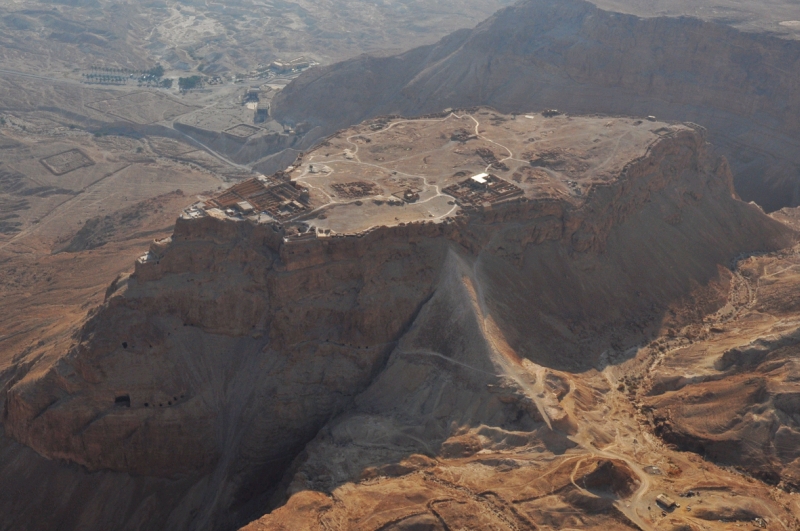
Masada is a dramatic mesa fortress in the Judean Desert, rising 400 metres above the Dead Sea. Built by Herod the Great in the 1st century BCE as a luxurious desert palace, it became the last stronghold of Jewish Zealots during the Great Revolt against Rome. In 73 CE, after a prolonged siege, nearly 960 defenders chose death over enslavement — an act that became one of the most powerful symbols in Jewish collective memory.

UNESCO recognised Masada as a symbol of the ancient Jewish kingdom and its violent destruction, calling the siege works surrounding the site "the finest and most complete Roman siege works to have survived to the present day." The Northern Palace, built by Herod, is described as an outstanding example of a luxurious villa from the Early Roman period.
Inscribed 2001

Old City of Acre

Crusader Capital of the Levant

(ii)(iii)(v)

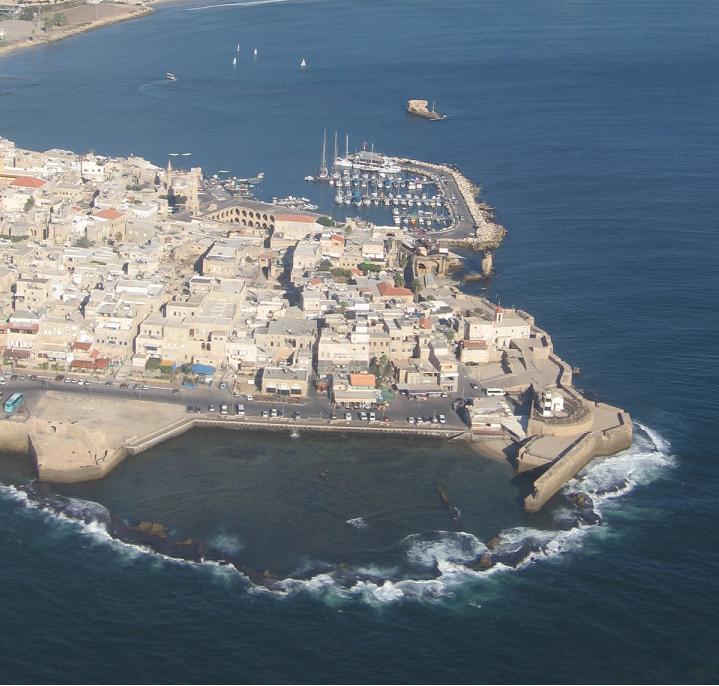
Acre (Akko) is one of the oldest continuously inhabited cities in the world, with a history stretching back over 4,000 years. The walled Old City contains one of the best-preserved Crusader urban complexes in the world, including the Knights' Halls, underground Crusader city, and the Ottoman-era Khan el-Umdan. The city was the capital of the Crusader Kingdom of Jerusalem after the fall of Jerusalem in 1187, and its fall in 1291 marked the end of Crusader presence in the Holy Land.

UNESCO recognised Acre as an outstanding example of an Ottoman walled town, built on the remains of a Crusader city. The site contains a unique layering of civilisations — Phoenician, Hellenistic, Roman, Arab, Crusader, Ottoman — making it an exceptional testimony to the interchange of human values across the centuries.

Inscribed 2003

White City of Tel Aviv

The Modern Movement

(ii)(iv)

Tel Aviv's White City is a unique urban ensemble of over 4,000 buildings constructed in the Bauhaus and International Style during the 1930s and 1940s. Jewish architects who had studied at the Bauhaus school in Germany brought the modernist aesthetic to the newly founded city, adapting it to the Mediterranean climate with features like deep balconies, pilotis (raised ground floors), and flat roofs. The result is the largest concentration of Bauhaus architecture anywhere in the world.

UNESCO recognised the White City as an outstanding example of new town planning and architecture in the early 20th century, representing an important interchange of human values in the development of modern architecture and town planning. The city demonstrates the adaptation of Modern Movement principles to local cultural traditions and climatic conditions.

Biblical Tels
2005
Northern District & Negev
© Wikimedia Commons · CC BY-SA 4.0

Inscribed 2005

Biblical Tels

Megiddo, Hazor & Beer Sheba

(ii)(iii)(iv)(vi)

Three of Israel's most important biblical archaeological sites — Tel Megiddo, Tel Hazor, and Tel Beer Sheba — were jointly inscribed as a single UNESCO World Heritage Site. Each is a tel (artificial mound) formed by successive layers of human settlement over thousands of years. Together they represent the most important biblical cities of the ancient Canaanite and Israelite periods, and contain remarkable water systems, city gates, and palace complexes.

UNESCO recognised these tels as outstanding examples of ancient cities with direct biblical connections, representing the interchange of human values in the ancient Near East. The water systems at all three sites — particularly the 9th-century BCE water shafts — demonstrate extraordinary engineering ingenuity. Megiddo is also significant as the site of multiple ancient battles and as the origin of the word 'Armageddon' (Har Megiddo).

Incense Route — Desert Cities
2005
Negev Desert
© Etan Tal · CC BY 3.0

Inscribed 2005

Incense Route — Desert Cities

Nabataean Cities of the Negev

(iii)(v)

The Incense Route was a network of trade routes across the Negev Desert, used by the Nabataean civilisation from the 3rd century BCE to the 2nd century CE to transport frankincense, myrrh, and spices from Arabia to the Mediterranean world. Four Nabataean cities — Avdat (Oboda), Haluza (Elusa), Mamshit (Mampsis), and Shivta (Sobata) — along with their associated caravanserai and agricultural systems, were inscribed as a single UNESCO site.

UNESCO recognised the Incense Route cities as an outstanding example of a landscape that illustrates a significant stage in human history — the Nabataean civilisation's mastery of desert agriculture and long-distance trade. The cities demonstrate the Nabataeans' remarkable ability to collect and manage rainwater in an arid environment, enabling permanent settlement in the desert.

Inscribed 2008

Bahá'í Holy Places

Haifa and the Western Galilee

(iii)(vi)

The Bahá'í Faith's two holiest sites are located in northern Israel: the Shrine of the Báb on Mount Carmel in Haifa, surrounded by 19 terraced gardens descending to the sea, and the Shrine of Bahá'u'lláh in Acre (Bahji). The Bahá'í Faith was founded in 19th-century Persia, and its founders were exiled to the Ottoman province of Palestine, where they died and were buried. Today these sites are the spiritual and administrative centre of the global Bahá'í community.

UNESCO recognised the Bahá'í Holy Places as an outstanding example of the interchange of human values and as sites directly associated with the history of the Bahá'í Faith — one of the world's youngest major religions. The terraced gardens on Mount Carmel are considered a masterpiece of landscape design, combining Persian, European, and local garden traditions.

Inscribed 2012

Nahal Me'arot Caves

Sites of Human Evolution at Mount Carmel

(iii)(v)

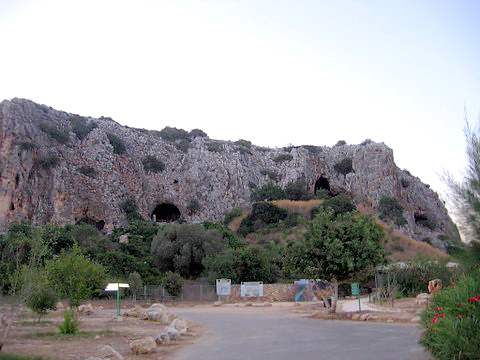
The Nahal Me'arot (Wadi el-Mughara) Nature Reserve on the western slopes of Mount Carmel contains four prehistoric caves — Tabun, Jamal, El-Wad, and Skhul — that were continuously inhabited by humans for over 500,000 years. The caves contain evidence of multiple prehistoric cultures, from the Acheulian period through the Natufian culture, and are one of the few places in the world where the transition from Neanderthal to modern human populations can be studied.

UNESCO recognised the Nahal Me'arot caves as an outstanding example of human evolution and cultural continuity over half a million years. The Skhul cave contains some of the earliest evidence of modern human behaviour outside Africa, including intentional burial with grave goods. The site demonstrates the transition from hunter-gatherer societies to the first permanent, agriculture-based communities.

Inscribed 2014

Caves of Maresha and Bet Guvrin

A Microcosm of the Land of the Caves

(v)

The Bet Guvrin-Maresha National Park in the Judean Lowlands contains approximately 3,500 caves carved from soft chalk rock over a period of 2,000 years, from the 9th century BCE to the Early Islamic period. The caves served as water cisterns, olive oil presses, burial chambers, dovecotes, quarries, and hideouts. The site also contains the remains of the ancient Judahite city of Maresha, the Roman city of Eleutheropolis, and a Crusader fortress.

UNESCO recognised the Caves of Maresha and Bet Guvrin as an outstanding example of a cultural landscape that illustrates the human capacity to adapt to and transform the natural environment over millennia. The soft chalk geology of the Judean Lowlands created a unique underground world that successive civilisations — Judahite, Idumean, Hellenistic, Roman, Byzantine, and Islamic — exploited in different ways.

Inscribed 2015

Necropolis of Bet She'arim

A Landmark of Jewish Renewal

(ii)(iii)

The Necropolis of Bet She'arim in the Lower Galilee is the most important ancient Jewish cemetery in the world. The site flourished in the 2nd–4th centuries CE as the burial place of Rabbi Yehuda HaNasi — the compiler of the Mishnah and the leader of the Jewish community after the Bar Kokhba Revolt. His burial there attracted Jews from across the Land of Israel and the Diaspora, creating an extraordinary complex of 30 catacombs with hundreds of burial chambers.

UNESCO recognised Bet She'arim as an outstanding example of the interchange of human values in the ancient world, where Jewish, Greek, and Eastern artistic traditions merged in a unique funerary art. The catacombs contain hundreds of inscriptions in four languages (Hebrew, Greek, Aramaic, and Palmyrene) and a rich variety of artistic motifs including menorahs, Torah arks, and mythological scenes.

On the Horizon

Israel's Tentative List

Israel has nominated 18 additional sites to UNESCO's tentative list — sites it intends to nominate for full inscription in the future. These include some of the most significant archaeological and cultural sites in the country.

Triple-arch Gate at Tel Dan

Great Rift Valley – Hula

Early Synagogues in the Galilee

Sea of Galilee & Ancient Sites

Galilee Journeys of Jesus

Arbel Valley

Degania and Nahalal

Crusader Fortresses

Caesarea National Park

Mount Zion, Jerusalem

White Mosque, Ramle

Makhteshim Country

Mount Karkom & Timna

Horvat Minim

Bet She'an National Park

Nahal Me'arot (additional area)

The Arbel Valley

Sources of the Jordan

Image Credits

All photographs on this page are sourced from Wikimedia Commons and are used under open-source licenses (Creative Commons or Public Domain). Click the credit on each image to view the original file and license details.

White City of Tel Aviv:CC BY 2.5 · PikiWiki Israel
Incense Route — Desert Cities:CC BY 3.0 · Etan Tal
Caves of Maresha and Bet Guvrin:CC BY-SA 3.0 · Wikimedia Commons
Necropolis of Bet She'arim:CC BY-SA 4.0 · Wikimedia Commons